Osteopathic Treatment for the Optimal Movement and Wellbeing of Humans, Horses and Dogs

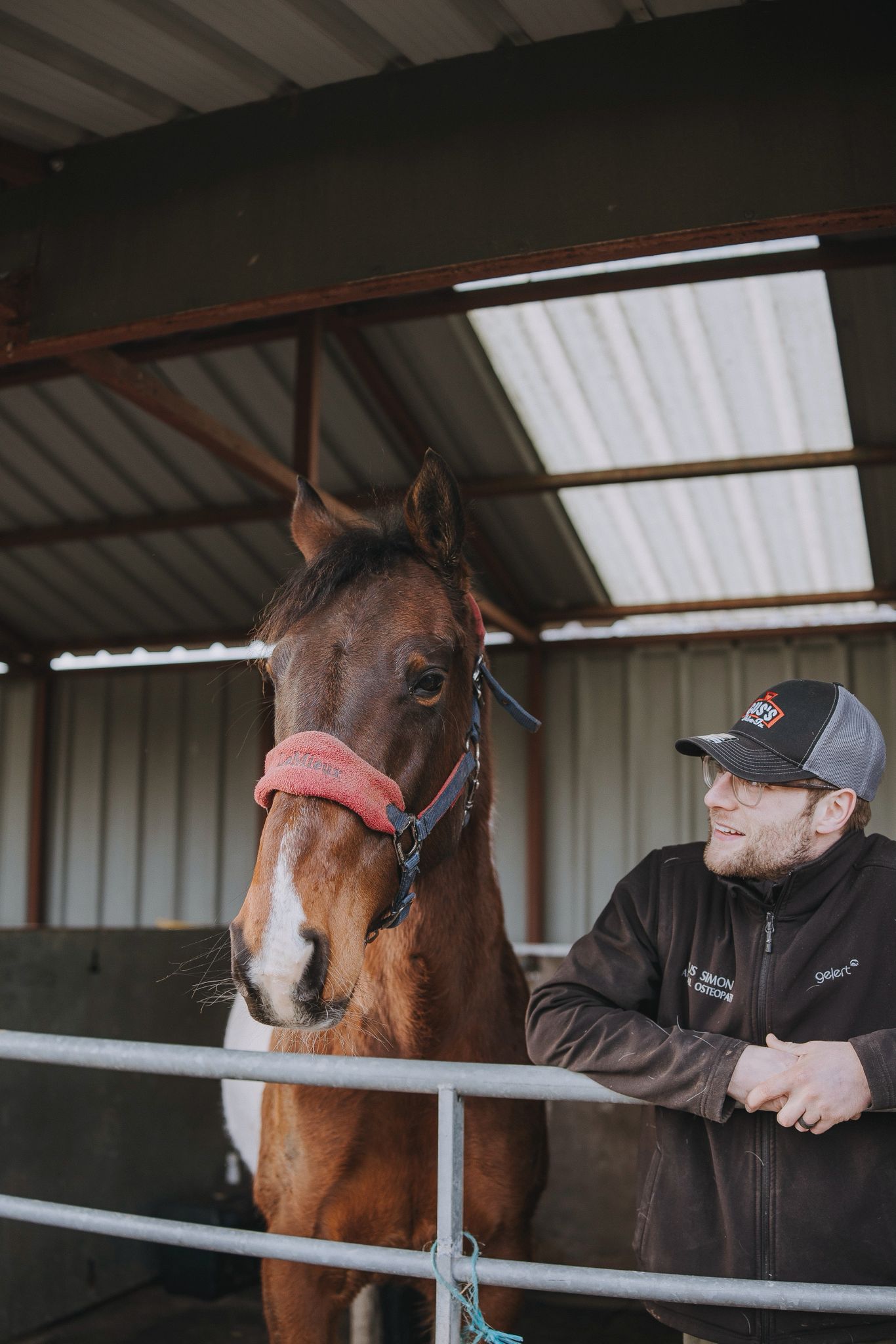
Hi, I'm Gus
I qualified in 2021 after completing my Masters Degree in Osteopathy at Swansea University which took 4 years. Following that I did a post graduate in Animal Osteopathy with the Osteopathic Centre for Animals in 2023. I have now recently finished 4 years working as an associate osteopath at a busy clinic in Sussex and I am now running my own osteopathic business in the heart of Deeside, Aberdeenshire.
I bring my young labrador called Russell with me to work, so please let me know if you wouldn’t like him with us during your session!
Osteopathy is for Everyone
I provide osteopathic care for both humans and animals, addressing acute injuries and chronic conditions with the same skilled approach. My techniques adapt to each patient, whether two legs or four.
A common misconception is that Osteopaths only treat neck and back pain. This isn’t the case, I treat from head to toe and from head to tail. Osteopathy is built on the foundation of finding the root cause of pain, and treating the whole body accordingly. From office workers to athletes, family pets to performance horses, everybody deserves to move without pain.

You're Here For a Reason
Experiencing pain? There is no better time than now to be seen. Humans and animals of all ages find relief through osteopathy, even after other treatments have failed. You (or your animal) has remarkable healing potential waiting to be unlocked with the osteopathy. This is where recovery begins.
What I offer is quality time and care. Unlike other busy clinics with practitioners having 15-20 people to see in a day, one in one out, with a rushed 15 minute treatment. Not only does the practitioner burn out, but the patients often feel let down by the lack of available time and treatment given.
With my sessions, not only does an hour allow the body to relax fully, but we can often treat 2 or 3 ailments rather than, “what would you like me to work on today, and we will look at the other bit next time”. Having once been that practitioner, I can faithfully say, my proven methods will get results.
Check Out What My Clients Say
Check Out The Relevant Service Page
It’ll tell you everything you need to know


I've Got Answers
It's easy to have a lot of questions when you're looking at doing something new, let me help you find your way.
-
What is osteopathy?
Osteopathy is a type of manual therapy that uses our eyes and hands to find, diagnose and treat musculoskeletal conditions. Osteopaths apply a range of techniques to help reduce pain, increase joint mobility, relieve muscle tension and enhance the blood and nerve supply to tissues, helping the body’s own healing mechanism.
-
Whats the difference between an osteopath and a chiropractor?
Chiropractors focus mostly on spinal integrity, using x-rays of the spine to form a diagnosis and work on subluxations with spinal manipulation. Sessions are generally 15-20 mins and often recommended 2-3x per week. depending on the condition.
Osteopaths like to find the root cause of a problem, using palpation and examination of the body using orthopedic testing to confirm a working diagnosis. From there we then like to treat the symptoms and cause of pain, allowing the body to regain balance. Sessions generally last 30-45 mins and recommended 1-2x per week depending on the condition.
-
What can osteopaths treat?
Osteopaths can treat a wide range of conditions including:
- Neck and back pain
- Headaches arising from cervicogenic origin
- Arthritis
- Shoulder and elbow pain
- Pelvic, hip and leg pain
- Tendon injury
- Pregnancy-related pain and postural problems
- Minor sports injuries including ligament and muscle strains
-
What techniques do osteopaths use?
Depending on your symptoms, some of the treatment methods I use include:
- Soft tissue massage
- Spinal manipulation
- Articulation and mobilisation of joints and muscles
- Muscle energy technique
- Stretching to encourage muscles to work against resistance
- Dry needling
-
Will I feel sore after treatment?
As your body readjusts and adapts to the changes that occur during treatment, you may sometimes feel tired or even a little achey (soreness rather than pain) after treatment. If this happens, effects can last from 2-24 hours after treatment. After this you should feel much better!
-
How do you treat animals?
We treat animals using the same techniques as humans! They have been adapted to work with their anatomy, but horses, dogs and humans have very similar anatomy.
-
How do animals tell you they're in pain?
Animals generally use body language and facial expressions to show they are in pain. Lameness will generally show during day to day activity and then on examination. We also use palpation and some specific testing to help us figure out what is going on and how we can make them feel better.